
Club Car Golf Carts: Models, Prices, and Which to Buy
Club Car's Onward, Tempo, and Villager lines explained: what each is built for, 2026 price bands, and how Club Car compares to EZGO and Yamaha.
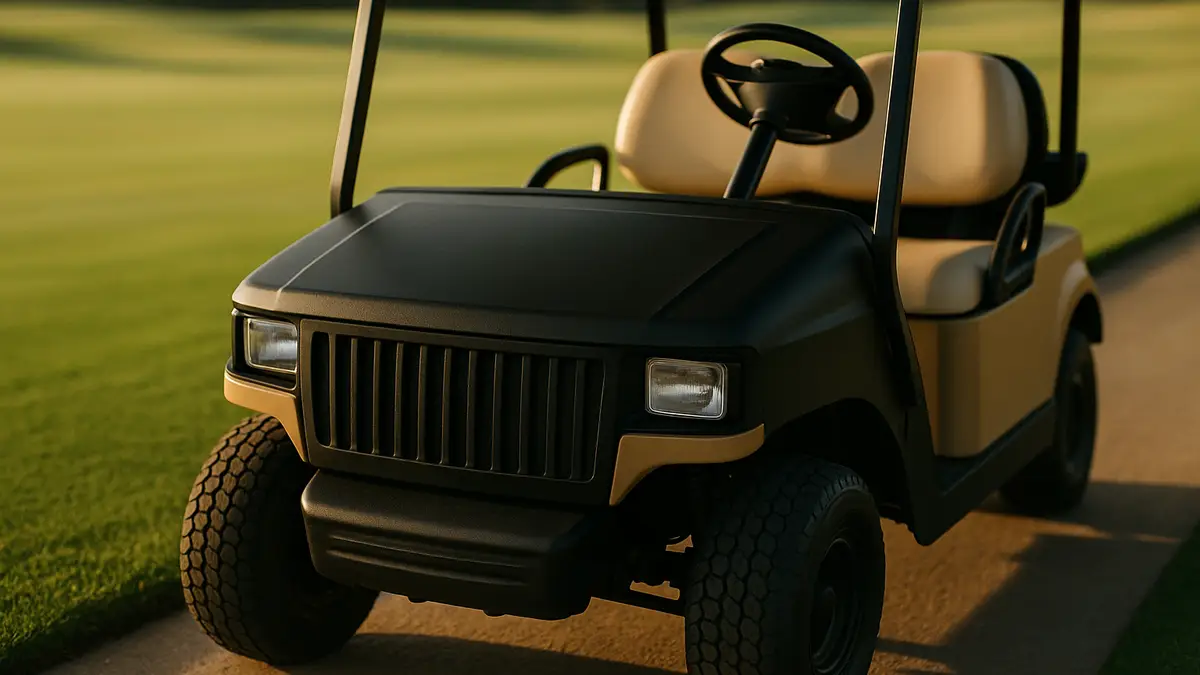
Club Car has been building golf carts long enough that its name is close to shorthand for the category itself, and the current lineup splits cleanly into two purposes: carts built to look good in a driveway, and carts built to survive a golf course fleet. Knowing which you’re actually shopping for saves you from paying fleet-grade plainness for a personal cart, or the reverse.
What is a Club Car golf cart, exactly?
Club Car is one of the three legacy golf cart manufacturers, alongside EZGO and Yamaha, building electric and gas carts primarily on 48-volt electric platforms since the mid-2010s. The brand’s current consumer-facing lineup is the Onward and Tempo series, with the Villager name used on some multi-passenger configurations.
Onward vs Tempo: which is which?
| Line | Built for | Styling |
|---|---|---|
| Onward | Personal and community ownership | More trim, color, and accessory options |
| Tempo | Golf course fleets, rental operations | Plainer finish, prioritizes durability |
Onward is what most personal buyers end up looking at, since it comes with more customization and a nicer standard finish. Tempo shows up more often in golf course fleets and rental programs where the cart needs to survive heavy daily use with minimal fuss, and dealers sometimes sell off-lease Tempo units at a discount once a course rotates its fleet, which can be a smart way to get a durable Club Car chassis for less if you don’t mind the plainer trim.
How much does a Club Car golf cart cost?
New Club Car electric carts with a lead-acid pack run roughly $9,000 to $12,500, in line with the broader new-electric-cart market. Lithium-equipped trims push toward the top of the $11,500 to $16,000 lithium band. Used Club Cars follow the general used-cart market: expect $3,000 to $6,500 for a 5-to-10-year-old unit in good shape, or $1,500 to $3,500 for anything older, with battery condition swinging that price significantly. Our full cost guide breaks down what else affects the final number, like accessories and financing.
What battery setup do Club Car carts use?
Current Club Car electric models run on 48-volt systems, wired as 8 x 6-volt, 6 x 8-volt, or 4 x 12-volt batteries in series depending on configuration. Lead-acid packs only deliver about half their rated amp-hour capacity as usable range before the plates degrade, while a lithium pack delivers essentially all of it. That difference roughly doubles usable range at the same rated capacity when you switch chemistries. Our battery guide covers voltage and chemistry in more depth if you’re deciding which pack to buy or replace with.
How does Club Car compare to EZGO and Yamaha?
All three sit in a similar price bracket for comparable trims, and the real differences come down to dealer density in your area, styling preference, and small mechanical differences in ride feel that most owners describe as minor. Club Car’s dealer and parts network is one of the largest in the industry, which tends to help resale value. Our brand comparison lays out where each of the six major brands wins and loses.
What accessories do Club Car owners typically add?
Lift kits and upgraded tires are common additions on Onward models used for property work, running $250-$800 in parts or $400-$1,000 installed depending on how much ground clearance you want. A smart charger, $150-$400 if not included, and a weatherproof cover, $50-$150, round out the most common first-year purchases. Buyers registering an Onward as street legal typically add mirrors, turn signals, and seat belts if the trim didn’t come with them standard.
What does Club Car ownership cost beyond the purchase price?
Battery replacement is the largest recurring cost: a lead-acid pack runs $1,000-$1,500 installed every 4-6 years, while a lithium pack runs $1,800-$3,200 but lasts 8-12 years. Beyond the battery, routine maintenance is limited mostly to tire wear, brake checks, and terminal cleaning, all low-cost tasks an owner can handle without a dealer visit. Our maintenance checklist covers the full schedule, and following it closely is the single biggest factor in whether a lead-acid pack reaches the full 4-6 year lifespan or fails early.
Who should buy a Club Car, and who shouldn’t
A Club Car Onward makes sense for a buyer who wants strong resale value and easy local service, and doesn’t mind paying a price similar to EZGO for it. A Club Car Tempo makes sense for a fleet buyer prioritizing durability over styling.
Not for: buyers chasing the lowest possible price on a lithium-equipped cart; Evolution and Icon frequently undercut Club Car on comparable trims, as covered in our buying guide.
What warranty comes with a new Club Car?
Club Car backs new carts with a limited warranty administered through its dealer network, with terms that can shift by model year and promotion. Confirm the current written warranty length and what it covers, battery, drivetrain, and body separately, with the specific dealer before you buy, since coverage on accessories and aftermarket add-ons is often handled differently than the base cart.
Making the final call
If dealer access and resale value matter most to you, Club Car is a safe default rather than a compromise. If price per feature is your top priority, it’s worth cross-shopping Evolution or Icon before signing, since the gap on a lithium-equipped cart can run into the thousands for similar equipment.
Frequently asked questions
Quick answers to what readers ask us most
What is the difference between Club Car Onward and Tempo?
Onward is styled for personal and community ownership with more trim and color options. Tempo is built plainer and tougher for golf course fleets and rental operations, where durability under heavy daily use matters more than looks.
How much is a new Club Car golf cart?
New Club Car electric carts typically run $9,000 to $12,500 with a lead-acid battery pack, or up to roughly $16,000 with a lithium pack, depending on trim and dealer.
Are Club Car golf carts 48 volt?
Current Club Car lineups are built on 48-volt systems, the standard across the industry since the mid-2010s for carts of this size, typically wired as 8 x 6-volt, 6 x 8-volt, or 4 x 12-volt batteries in series.
Is Club Car better than EZGO?
Neither is objectively better; both have comparable dealer networks and pricing. See our brand comparison for the specific trade-offs, and our EZGO guide for the direct alternative.