
Best Golf Cart Brands Ranked (2026 Buyer's Picks)
The six golf cart brands worth cross-shopping in 2026, ranked by price, parts availability, and who each one actually fits, with honest trade-offs for each.
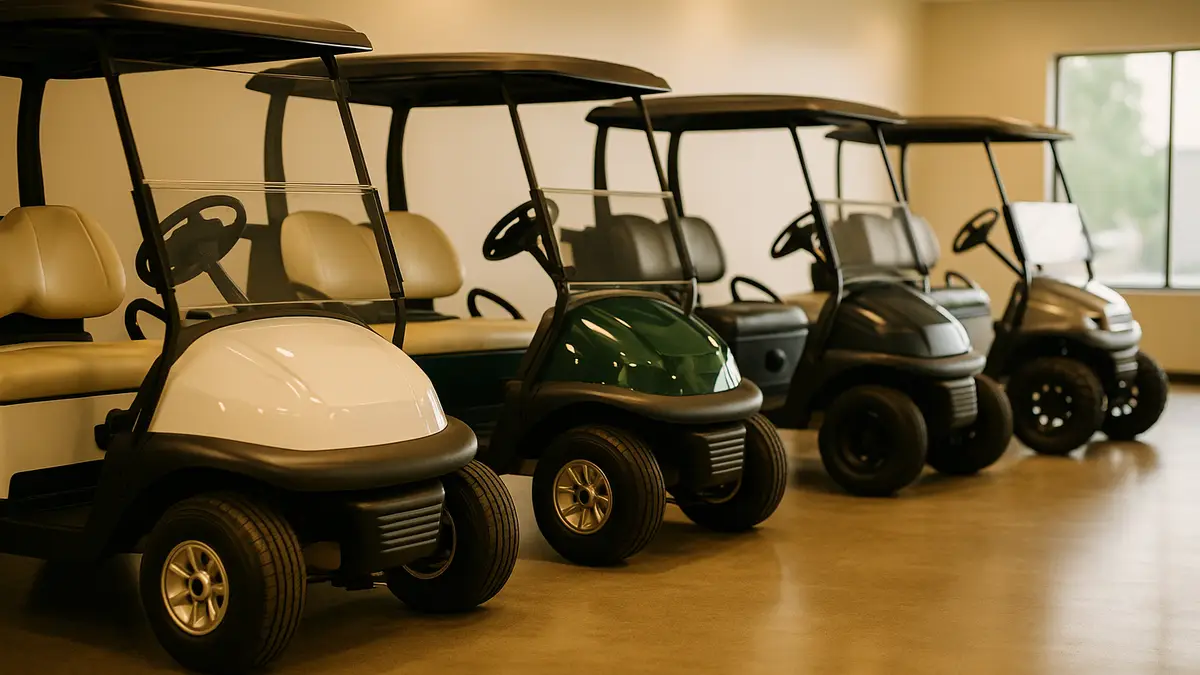
Six brands cover most of the golf cart market, and each wins on a different criterion: none of them wins on all of them. Here’s how they rank when you weigh price, parts availability, and what each brand is actually built to do well, so you can pick based on what matters to you instead of a generic “best overall” badge.
How we ranked these
Every pick below is scored on three things: price for comparable features, how easy parts and service are to find, and fit for a specific type of buyer. None of these brands is wrong; they’re built for different priorities, so read the “not for” note on each before you commit.
1. Club Car: best for dealer support and resale
Club Car’s Onward and Tempo lines run on 48-volt systems standard on current models, with new lead-acid units starting around $9,000 and lithium trims reaching toward $16,000. The brand’s decades-long dealer network means parts and service are rarely more than a short drive away, which keeps resale value strong. Buyers looking for a cart that resells easily years down the line consistently point to Club Car and EZGO as the safest bets specifically because parts sourcing stays easy long after the original warranty expires.
Not for: buyers who want the lowest sticker price. Club Car generally prices at or above Yamaha and EZGO for comparable trims. Full model and price detail is in our Club Car guide.
2. EZGO: best all-around value
EZGO’s Freedom and Express lines match Club Car closely on price and parts network, with the added benefit of Textron’s manufacturing scale keeping lead times shorter in many regions. It’s a safe, well-supported choice for a first-time buyer who doesn’t want to research beyond one brand.
Not for: buyers chasing the newest styling trends; EZGO’s design language changes slowly compared to Icon or Evolution. Details on trims and pricing are in our EZGO guide.
3. Yamaha: best for mechanical simplicity
The Drive2 line has a reputation among owners for straightforward maintenance and a durable drivetrain, priced comparably to EZGO and Club Car in the $9,000 to $15,000 new range depending on chemistry. Yamaha’s dealer network is smaller than the big two but still national.
Not for: buyers in areas with thin Yamaha dealer coverage, since service access varies more by region than with Club Car or EZGO. Full specs and pricing are in our Yamaha guide.
4. Evolution: best price-to-feature ratio
Evolution sells direct-to-consumer electric carts, often LSV-ready out of the box, at prices that undercut the legacy three for comparable lithium trims. It’s a strong pick for buyers planning to register a street-legal cart without paying dealer markup on the conversion equipment.
Not for: buyers who want an established local dealer network for warranty service, since Evolution’s service model leans more on shipped parts and regional partners.
5. Icon: best for styling and color options
Icon built its brand on glossy, distinctive color options and rounded styling that stands out from the boxier legacy brands, with i-series models scaling from 2-seat to 8-seat configurations. Pricing sits competitively with Evolution.
Not for: buyers prioritizing dealer density over style; Icon’s network is smaller and more concentrated in certain regions.
6. Denago: best rugged, off-road-leaning look
Denago’s Rover and Nomad lines lean into a lifted, textured-panel aesthetic that reads more utility-truck than country-club, at a price point competitive with Evolution and Icon. It’s a good fit for buyers who want a golf cart that also looks at home hauling gear around a property.
Not for: buyers who want a traditional, classic golf cart look; Denago’s styling is deliberately different from the fairway-standard silhouette.
Want something even more distinctive?
If none of these six scratch the itch and you’re shopping on style over practicality, our luxury and custom golf cart picks cover builds priced well above this list, from vintage-styled convertibles to fully custom body kits.
How does warranty coverage compare across brands?
Warranty terms shift often enough by model year and dealer that quoting a fixed number here would go stale fast, but the general pattern holds across the category: legacy brands like Club Car, EZGO, and Yamaha typically back their carts with a multi-year limited warranty administered through the dealer network, while newer direct-to-consumer brands like Evolution, Icon, and Denago often publish comparable or longer coverage specifically because they’re competing for trust without decades of brand history behind them. Always confirm the current written warranty terms with the specific seller before you buy, since promotional and standard coverage can differ.
Does financing change which brand makes sense?
Dealer financing is more commonly available through legacy brands given their larger dealer footprint, while some direct-to-consumer brands offer their own financing or buy-now-pay-later options at checkout instead. If financing terms matter as much to your decision as the sticker price, ask about the annual percentage rate and total cost of financing before comparing brands on MSRP alone, since a lower listed price with worse financing terms can cost more over the loan term than a higher listed price with better terms.
Choosing between them
Start with your top priority: if it’s resale and service access, Club Car or EZGO win. If it’s price per feature, Evolution or Icon win. If it’s mechanical simplicity, Yamaha wins. If it’s a rugged look for property use, Denago wins. For the full cost picture across new, used, and every chemistry option, our golf cart buying guide rounds out the decision.
Frequently asked questions
Quick answers to what readers ask us most
What is the number one golf cart brand?
There isn't a single best brand across every criterion. Club Car and EZGO have the deepest dealer and parts networks; Evolution and Icon typically offer more features per dollar; Yamaha has a reputation for mechanical simplicity and low maintenance.
Which golf cart brand holds its value best?
Club Car and EZGO carts tend to hold resale value well because of their large installed base and easy part sourcing, which keeps used demand strong. Newer direct-to-consumer brands have less resale history to judge by yet.
Are cheaper golf cart brands worth buying?
Often yes, if you're comparing a similarly equipped lithium-battery cart. Evolution and Icon frequently price several hundred to a couple thousand dollars below equivalent Club Car or EZGO trims. Check warranty length and local service access before deciding price alone should win.
What golf cart brand is best for a luxury build?
Icon and Club Car both offer upscale trim packages, but for fully custom builds with body kits and premium finishes, see our luxury and custom golf cart picks.