
UTV & ATV Buying Guide: How to Pick the Right Model
How to choose between a UTV and ATV, what entry-level to premium models cost in 2026, and which brands to compare before you buy.
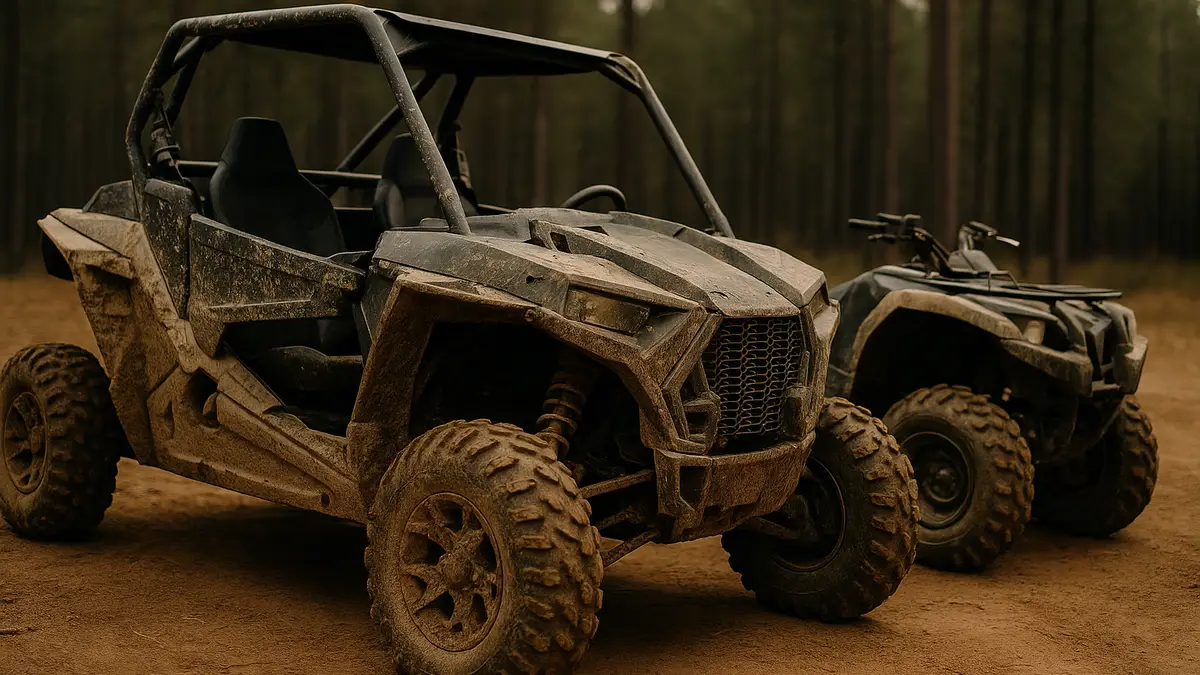
Shopping for off-road power usually starts with a simple question: one seat or two, and how much can it haul? The answer sorts most buyers into a UTV or an ATV before price ever enters the conversation, and getting that first call right saves you from cross-shopping machines that don’t actually fit your use case.
What’s the real difference between a UTV and an ATV?
A UTV, also called a side by side or SxS, is a multi-passenger off-road vehicle with a steering wheel, roll cage, and bench or bucket seating, built for hauling cargo and carrying passengers. An ATV is a single-rider, straddle-seat machine steered like a motorcycle, built for agility on tight trails. For the full breakdown of how they handle differently and which fits which terrain, see our UTV vs ATV guide.
How much should you budget?
| Category | Price range |
|---|---|
| New recreational/utility ATV | $6,000 - $12,000 |
| Entry-level UTV | $10,000 - $16,000 |
| Mid-range UTV (Ranger/Defender class) | $16,000 - $25,000 |
| Full-size premium UTV | $25,000 - $35,000+ |
| Used UTV/ATV | Roughly 40-60% of new MSRP |
Used pricing depends heavily on hours and how the machine was stored, so two units at the same age can land at very different points in that range. If value is the deciding factor, our best UTV for the money picks focus on where the spec-per-dollar actually peaks.
Which brand should you buy?
Polaris and Can-Am lead the mid-to-premium segment, with Kubota, John Deere, and CFMoto competing hard on utility-focused and value trims. Polaris Ranger and Can-Am Defender are the two most cross-shopped models in the utility class, and the differences between them come down to suspension feel, cab options, and towing capacity rather than one being objectively better. Our Polaris Ranger vs Can-Am Defender comparison breaks that matchup down directly, and our UTV brand comparison covers the wider field including Kubota and John Deere.
What top speed should you expect?
UTVs and side-by-sides range from 40 to 80 mph depending on model class, with utility-focused trims tuned lower for control and sport trims tuned for outright speed. That’s a wide gap, and it matters more for how the machine feels on a trail than for practical use, since most work and recreational riding never approaches the top end anyway.
New or used?
New machines carry a warranty and current safety features, which matters if you’ll be riding trails or working alone on a property. Used UTVs and ATVs typically sell for 40-60% of new MSRP, and the spread depends heavily on engine hours and maintenance history rather than age alone. A low-hour unit that sat mostly stored can be a better buy than a newer one that was worked hard, so always ask for maintenance records over a Carfax-style age assumption. Our used ATV and UTV buying guide covers the specific inspection points that matter most on these machines.
What ongoing costs come with ownership?
Fuel, oil changes, and tire wear are the recurring costs on a gas-powered UTV or ATV, and both categories see heavier tire wear than a golf cart given the terrain they’re built for. Budget for a service interval roughly every 25-50 hours of use for oil and filter changes, more often if you’re riding dusty or muddy trails regularly. Insurance is optional in many states for off-road-only use but often required if the machine will ever touch a public road, so check your state’s rules before assuming you’re covered by a general auto policy.
What accessories should you plan for?
A winch is the most commonly added accessory on a work-focused UTV, useful for both recovery and light towing tasks around a property. Covers, trailers, and upgraded tires round out the most common upgrade list, and all three vary widely in price depending on the machine’s size class. Our UTV and ATV accessories guide covers winches, covers, and trailers specifically, including what to look for at each price point.
What safety equipment should you plan for?
Beyond the roll cage and seat belts that come standard on most UTVs, a helmet is strongly recommended for both UTV and ATV riding regardless of state law, since neither category offers the crash protection of an enclosed vehicle. Many states require a helmet for ATV riders under a certain age and recommend it for all riders; UTV helmet requirements vary more by state and by whether the machine has a full cab enclosure. Eye protection, gloves, and over-the-ankle boots round out the basic safety kit most experienced riders keep on hand regardless of what’s legally required.
Can you finance a UTV or ATV?
Yes, and financing is common given the price range. Dealers typically offer financing directly, and manufacturer-backed credit programs sometimes include promotional rates on new units during peak buying seasons. As with any large purchase, compare the total cost of financing against the monthly payment alone, since a longer term at a higher rate can cost significantly more over the life of the loan than a shorter term at a lower one.
Picking based on how you’ll actually use it
A property owner hauling feed and tools benefits most from a UTV’s bed and towing capacity. A trail rider prioritizing tight-terrain agility and lower cost usually does better with an ATV. Someone who wants both passengers and real cargo capacity, with the budget to match, lands in the mid-range UTV bracket around $16,000 to $25,000.
Once you know which category fits, the brand and trim decision gets much easier, because you’re comparing machines built for the same job instead of comparing a work-focused Ranger against a sport-tuned trail machine that was never meant to compete with it.
Frequently asked questions
Quick answers to what readers ask us most
Is a UTV or ATV better for a beginner?
An ATV is generally easier to learn on and cheaper to buy, starting around $6,000. A UTV offers more stability and passenger capacity but costs more and handles differently on tight trails.
How much does a UTV cost new?
Entry-level UTVs start around $10,000 to $16,000. Mid-range models in the Polaris Ranger and Can-Am Defender class run $16,000 to $25,000, and full-size premium trims can exceed $35,000.
What's the difference between a UTV and a side by side?
Nothing. UTV, side by side, and SxS all refer to the same category: a multi-passenger off-road vehicle with a steering wheel, roll cage, and bucket or bench seating, distinct from the straddle-seat ATV.
Can you use a UTV for farm or property work?
Yes, and it's one of the category's biggest use cases. A cargo bed, higher towing capacity, and available attachments make UTVs common for hauling feed, tools, and small implements around a property.